Source: Graphene-Info, by Roni Peleg, Graphene-Info (October 8, 2026). AI-generated summary by biochip.com, published . Not independently reviewed.
Key takeaways
- The EIC-funded MINIGRAPH consortium built graphene neural probes and implantable electronics that decode signals from hundreds of neural sites.
- Nanoflex Robotics and ETH Zurich validated magnetic robotic probe implantation in a large animal model with reported sub-millimeter deep-brain accuracy.
- The system has not been established in human patients, and projected 10-year stability comes from accelerated aging tests.
The European MINIGRAPH project has combined graphene neural probes with a magnetically guided robotic implantation method designed to place ultra-thin electrodes deep in the brain. Coordinated by ICN2 and funded by the European Innovation Council, the consortium included INBRAIN Neuroelectronics, imec, Fraunhofer, Leiden University Medical Center, ETH Zurich, Nanoflex Robotics, and Palacký University Olomouc. The project focused initially on Parkinson's disease, where recording brain activity and delivering precisely timed stimulation could help tailor treatment to an individual's neural signals. Its prototype was functionally validated in a translational model.
Building a responsive neural interface
MINIGRAPH set out to create an autonomous system that can record neural activity, interpret those signals, and provide targeted stimulation in response. Think of it as a listening-and-response system: electrodes pick up electrical patterns in neural tissue, electronics interpret those patterns, and the system can then send controlled electrical stimulation back.
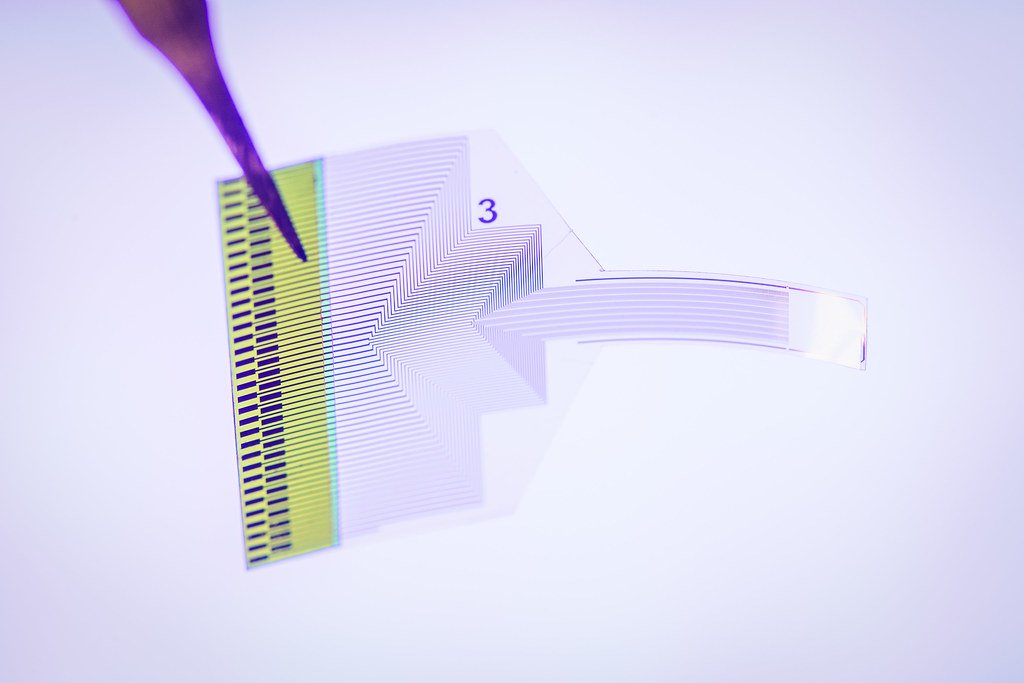
The consortium developed probes for both cortical and subcortical regions of the brain. The cortex is the brain's outer layer, while subcortical structures sit deeper inside and are especially relevant to disorders such as Parkinson's disease. These probes were based on INBRAIN's graphene thin-film electrodes, which use an exceptionally thin conductive carbon material to make close electrical contact with tissue.
Signals from hundreds of neural sites
The team also developed implantable electronics capable of decoding signals from hundreds of neural sites. Pairing the electronics with the probes matters because an electrode alone only captures raw electrical activity. The implanted processing system is intended to turn those recordings into information that can guide targeted stimulation.
MINIGRAPH integrated the probes and electronics into a prototype and functionally validated it in a translational model. That result indicates the components could operate together as a system, rather than only as separate laboratory technologies.
A robotic route into the brain
Placing ultra-thin probes accurately is a difficult practical challenge. Nanoflex Robotics and ETH Zurich developed an implantation approach that uses a magnetic carrier and an electromagnetic robotic system to steer the probes along straight or curved paths while using X-ray imaging for guidance.
Nanoflex validated the procedure both in vitro and in vivo in a large animal model. The company reported sub-millimeter accuracy at deep-brain targets, and said the approach could make implantation faster and more reproducible while preserving electrode function. The work does not establish performance in human patients.
Durability and safety evaluation
Implants intended to remain in the body must withstand years of chemical and mechanical stress. INBRAIN reported that accelerated aging tests support a projected probe stability of more than 10 years. Accelerated aging exposes devices to conditions intended to model a longer period of use in a shorter experiment, so the finding is a durability projection rather than a decade of clinical use.
The project also conducted cell-level and molecular toxicity studies, along with biocompatibility testing, to support safety evaluation. Biocompatibility asks whether a material can perform its intended role in contact with the body without causing an unacceptable biological response.
Why This Matters
Deep-brain stimulation is already used to treat some people with Parkinson's disease, but MINIGRAPH's goal is more adaptive: using recorded neural activity to help guide stimulation. The graphene probes, signal-decoding electronics, and magnetic robotic delivery system address different parts of that challenge, from sensing to placement.
The next question is how these elements perform in further preclinical work and, ultimately, human studies. For now, the project offers a prototype neural-interface platform and an animal-validated method for delivering its ultra-thin probes along controlled trajectories.
Topics: Brain & neurological health
Start here: What is a biochip?