
Source: HIT Consultant, written by Jasmine Pennic (October 13, 2026). AI-generated summary by biochip.com, published . Not independently reviewed.
Key takeaways
- Mount Sinai launched miBrain and µCVchip human tissue platforms aboard SpaceX CRS-35 to the International Space Station.
- The µCVchip system contains up to 16 beating cardiovascular organoids with automated pacing, pressure testing, imaging, and fluid collection.
- The mission aims to identify mechanisms, but it does not establish clinical benefits or therapeutic targets yet.
Mount Sinai Health System researchers have sent two human tissue platforms to the International Space Station aboard SpaceX CRS-35 to examine how spaceflight may accelerate features of brain and cardiovascular aging. The investigations combine patient-derived stem cell models, microfluidic organ-on-a-chip devices, and automated hardware built by Space Tango with NASA collaboration. One platform models the brain, while the other contains beating cardiovascular organoids. By exposing these tissues to microgravity and elevated radiation in low Earth orbit, the teams aim to study cellular stress, neurological decline, and cardiovascular deconditioning under conditions difficult to reproduce on Earth.
Two Human Tissue Models in Orbit
The mission carries the miBrain platform and the µCVchip platform. Both use stem-cell-derived human tissues, but they address different questions about how cells and organs respond to the unusual physical environment of space.
Microgravity removes much of the normal mechanical loading imposed by Earth’s gravity, while low Earth orbit also exposes experiments to higher radiation than they would receive on the ground. Together, these conditions can act as an accelerated model for biological changes associated with aging, including cellular stress and functional decline.
Building a More Complete Brain Model
Led by Joel W. Blanchard, PhD, the miBrain experiment uses human induced pluripotent stem cells, or iPSCs. These are adult cells that have been reset into a stem-like state, allowing scientists to grow them into specialized cell types. The miBrain model includes neurons, astrocytes, microglia, and functional microvasculature, the tiny blood-vessel network that helps support brain tissue.
That cellular mix matters because the brain operates less like a collection of isolated wires than a busy city. Neurons transmit signals, astrocytes help maintain the environment around them, microglia act as immune cells, and blood vessels regulate what reaches the tissue. The experiment will evaluate how space conditions affect communication among these cells, the permeability of the blood-brain barrier, and markers of neuroinflammatory injury.
The team will also examine the APOE4 allele, a genetic variant identified as the strongest genetic risk factor for late-onset Alzheimer’s disease. By comparing models with this variant against Earth-based controls, the researchers aim to assess whether genetic susceptibility changes the pace of cellular aging or sensitivity to environmental stress.
Beating Cardiovascular Organoids on a Chip
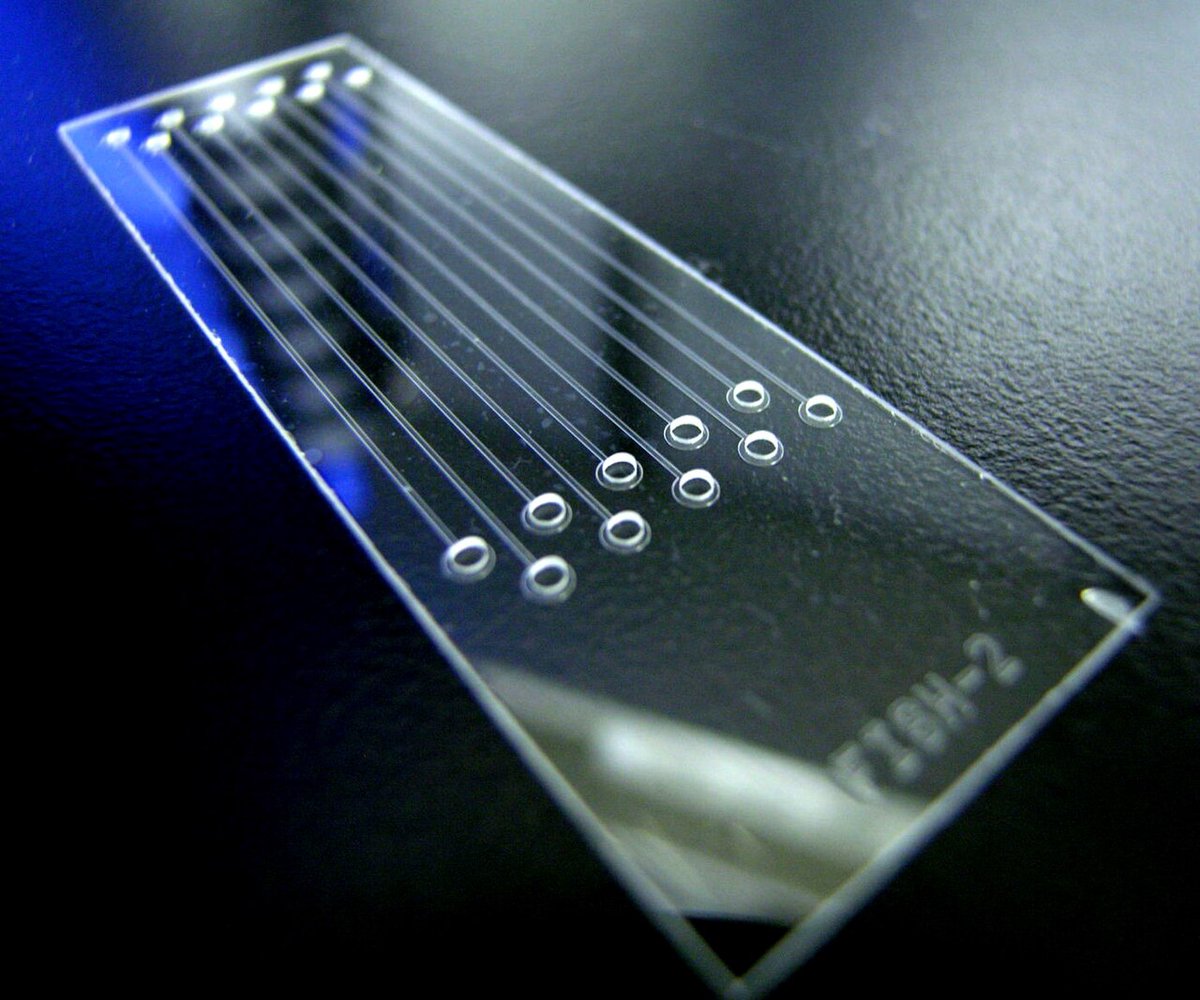
The µCVchip project, co-led by Kevin D. Costa, PhD, and David Sachs, PhD, sends up to 16 beating human cardiovascular organoids into orbit. An organoid is a small, lab-grown tissue model that reproduces selected features of an organ. These organoids are grown from healthy stem cells and housed in two microfluidic chips, devices that move tiny volumes of fluid through miniature channels.
Think of a microfluidic chip as a carefully plumbed living test chamber. It can deliver fluids, apply physical forces, and monitor cells while using only very small samples. The CRS-35 system adds automated electrical pacing, hydraulic pressure testing, high-resolution microscopy, and programmed fluid collection inside Space Tango CubeLab hardware.
These tools are intended to track cardiac contractility, meaning the strength of heart-like tissue contraction, and vascular remodeling, or changes in blood-vessel structure. The experiment builds on a preliminary cell-viability mission flown on SpaceX CRS-29 in 2023.
Why This Matters
Spaceflight can place unusual strain on the cardiovascular system, including cardiac deconditioning and vascular stiffness. The Mount Sinai teams aim to identify cellular mechanisms that may contribute to these changes, with the longer-term goal of informing research on heart failure and vascular disease in aging populations on Earth.
The brain experiment addresses a related challenge: how genetics and environmental stress combine to influence neurodegeneration. Measuring living human tissue models during orbital exposure could help researchers distinguish changes linked to microgravity and radiation from those seen in matched controls on Earth.
Results from the mission will help determine how faithfully these platforms capture spaceflight-related aging processes and which cellular measurements are most useful for future studies. The work also extends the use of organ-on-a-chip systems beyond terrestrial laboratories, placing complex human tissue models into an automated orbital research environment.
Topics: Microfluidics · Organ-on-a-chip · Brain & neurological health · Heart & vascular health
Start here: Microfluidics explained
Related articles
- Biomedical Materials and Fabrication Methods for Construction of In Vitro Neurovascular Unit Models
- Researchers develop 'organ on a chip' for better drug testing
- Quantum Nanosensors Could Reveal What Organs-on-Chips Miss
- Engineering Multiscale Vasculature: Biological Principles, Design Constraints, and Advanced Biofabrication Strategies for Functional Vascular Networks