.png)
Source: Physicians Committee for Responsible Medicine (October 6, 2026). AI-generated summary by biochip.com, published . Not independently reviewed.
Key takeaways
- NIH's four TraCe MPS centers develop tissue chips for liver, kidney, blood-brain barrier, and reproductive-system drug research.
- University of Rochester's barrier platform entered FDA's ISTAND program, while Ramkumar Menon's team developed five pregnancy-related chips.
- The current five-year TraCe MPS program ends in 2029, potentially before its tissue chips complete qualification.
The Physicians Committee is urging the National Center for Advancing Translational Sciences, part of the National Institutes of Health, to continue funding a program that helps qualify tissue chips for drug development. The Translational Centers for Microphysiological Systems, or TraCe MPS, support human cell-based models designed to mimic organ functions and reduce dependence on animal experiments. The program links academic chip developers with the Food and Drug Administration, helping turn promising laboratory models into tools that drug developers and regulators can use with confidence. Its current five-year funding period ends in 2029, raising questions about whether the centers will have enough time to complete qualification work.
Building confidence in tissue chips
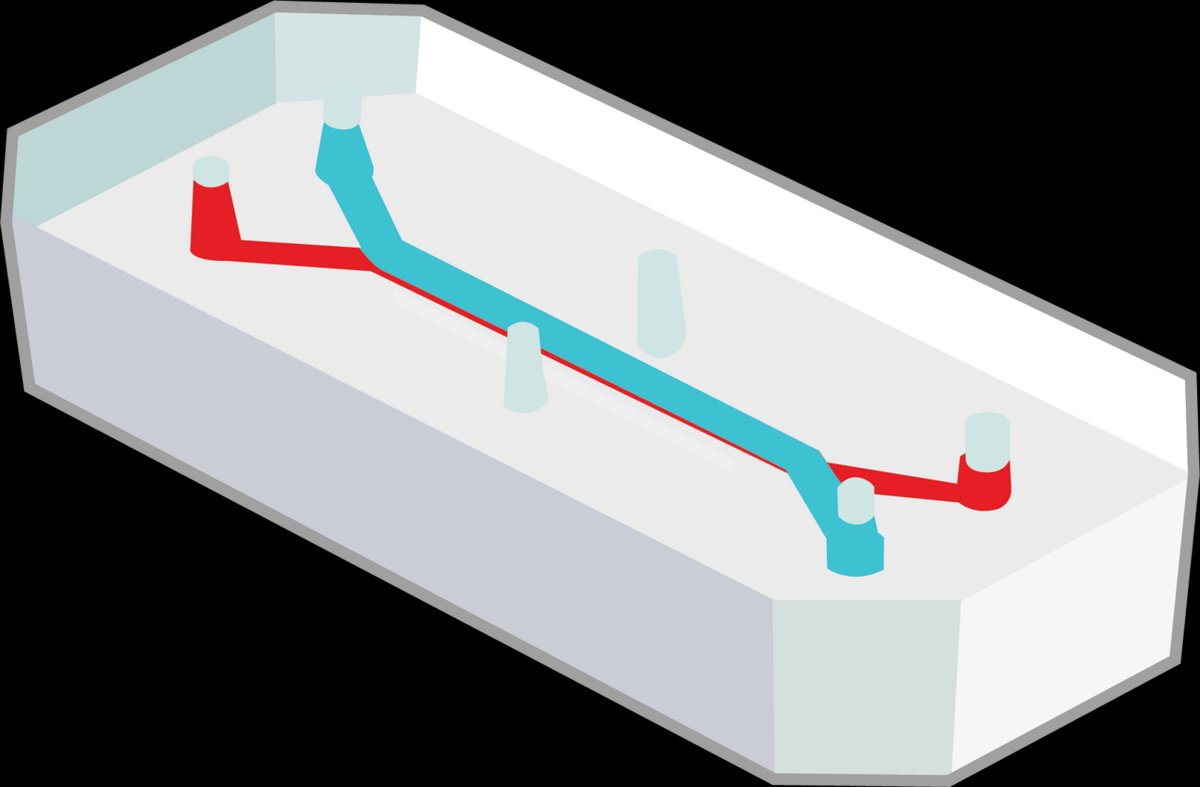
Tissue chips are small systems built with human cells and fluid channels. Like a miniature plumbing network inside the body, the channels deliver nutrients and drug compounds while allowing researchers to observe how cells respond under controlled conditions.
These systems are a type of new approach methodology, meaning a human-relevant research method intended to complement or replace some animal testing. By reproducing selected features of organs, tissue chips can model how a drug interacts with tissues such as the liver, kidney, or placental barrier.
The TraCe MPS program was established by the National Center for Advancing Translational Sciences to help qualify these models for drug development, support their wider use, and reduce animal testing. Qualification does not determine whether a drug is approved. Instead, it establishes whether a particular tool can reliably answer a defined question in a development or regulatory setting.
Connecting chip developers with regulators
The Food and Drug Administration, or FDA, can consider tissue chips and other new approach methodologies without formal qualification. Still, qualification can provide a common evidentiary foundation for pharmaceutical companies and regulators evaluating relatively new technologies.
Dr. James McGrath directs the Translational Center for Barrier Microphysiological Systems at the University of Rochester, one of four NIH-funded TraCe MPS centers. He said the centers aim to turn tissue-chip and organoid models into systems valued by pharmaceutical companies for discovery, the FDA for regulatory use, or both.
McGrath's team has had its platform accepted into the FDA's Innovative Science and Technology Approaches for New Drugs program, known as ISTAND. That program provides a pathway for evaluating novel drug-development tools intended for use across multiple drug programs.
Models for pregnancy and other organ systems
The four centers are developing human-based tools for the liver, kidney, blood-brain barrier, and reproductive system. Each target presents a different challenge: a useful chip must reproduce enough of a tissue's biology to generate results that are meaningful for drug development.
At Texas A&M University and the University of Texas Medical Branch, Dr. Ramkumar Menon's center is developing tissue-chip models of human pregnancy. The models are designed to examine how drugs cross the placental barrier without using animals.
Menon's team has developed five chips intended as drug-development tools for validation and qualification. One has already been submitted to ISTAND, while the others are planned for submission.
Why This Matters
Drug developers need methods that are both biologically relevant and dependable enough for high-stakes decisions. Tissue chips offer a way to study human cells in organized, flowing systems rather than in static cell cultures, potentially giving researchers a closer view of how a drug behaves in specific tissues.
The Physicians Committee submitted a comment to the NCATS Advisory Council in September supporting continued investment in TraCe MPS. During the council meeting, NCATS Director Dr. Joni Rutter expressed support for the program, and Dr. Anna Ramsey Ewing, director of the Division of Preclinical Innovation, said NCATS has tools to help the centers meet their objectives.
The next challenge is sustaining the work through qualification and broader adoption. Continued support could determine whether these tissue-chip platforms move from specialized academic models to routinely usable tools in drug discovery and regulatory science.
Topics: Organ-on-a-chip · Drug development & safety
Start here: Organ-on-a-chip explained
Related articles
- 90% of drugs that pass animal tests fail in humans; FDA makes room for alternatives
- Organ-on-a-chip platforms for drug development, cellular toxicity assessment, and disease modeling
- Opportunities and challenges for analytical chemists: organ-on-chip devices as new approach methods (NAMs) for identifying potential toxins
- Researchers develop 'organ on a chip' for better drug testing