Source: Journal of the Electrochemical Society, written by Bob M Lansdorp; Jennifer M Gibson; Lior Sepunaru; Kevin W Plaxco (November 12, 2026). AI-generated summary by biochip.com, published . Not independently reviewed.
Key takeaways
- DCT analysis revealed two electron-transfer populations in a vancomycin EAB sensor, with rates that stayed nearly constant as target concentration changed.
- The populations' relative occupancies shifted with vancomycin concentration, and their amplitudes were consistent with about one-third of aptamers not responding.
- The analysis does not establish why roughly one-third of the surface-bound aptamers do not respond to the target.
Researchers have used a new analysis method to uncover two distinct electron-transfer populations in an electrochemical aptamer-based (EAB) sensor for vancomycin. The populations transfer electrons at different rates, but those rates stay nearly constant as vancomycin concentration changes. Instead, the sensor’s response appears to come from shifts in how many molecules occupy each state. The finding shows how a better-matched analysis of this sensing platform can reveal molecular behavior that conventional impedance analysis may miss.
A different model for molecules at an electrode
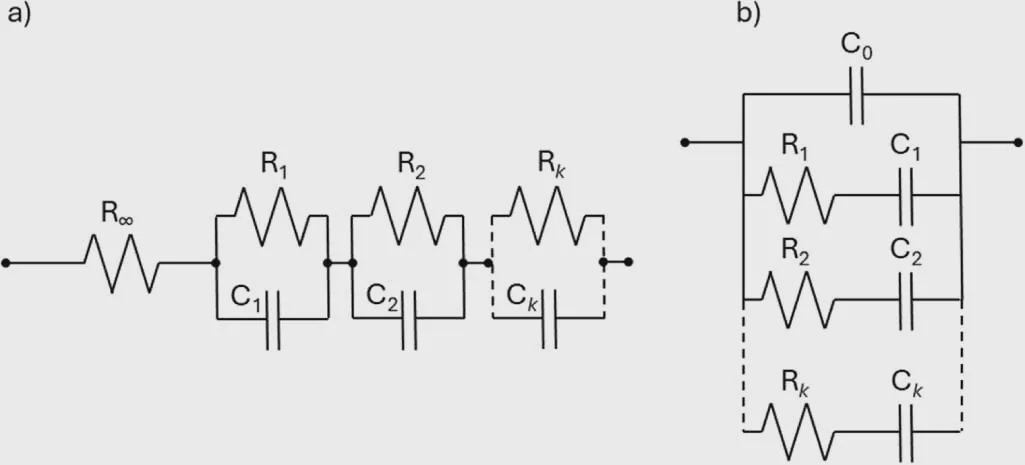
Electrochemical impedance spectroscopy (EIS) measures how a system responds to small electrical signals applied at different frequencies. Researchers often interpret these measurements with a model called the Distribution of Relaxation Times, but its assumptions do not fit every electrode. That method represents current as passing through a sequence of material domains, while surface-tethered redox molecules share an interface.
Think of the molecules as separate lanes carrying charge across the same boundary, rather than stations that current must pass through one after another. The Distribution of Capacitive Times (DCT) method uses a parallel-circuit model that better matches this arrangement. Each molecular population contributes its own capacitance and electron-transfer timescale, allowing distinct groups to appear as separate peaks in the analysis.
Two populations, changing proportions
Bob M. Lansdorp and colleagues applied DCT to an EAB sensor that detects vancomycin. In this type of sensor, aptamers, target-binding molecules attached to an electrode, carry redox reporters that exchange electrons with the surface. The team found two electron-transfer populations whose rates remained nearly constant across vancomycin concentrations.
What changed was the populations’ relative occupancy. As vancomycin concentration shifted, the balance between the two groups changed, indicating that the sensor’s signal arose from molecules redistributing between states rather than each molecule’s electron-transfer rate changing continuously. The team also analyzed the fraction of aptamers that folded in response to target concentration.
The population amplitudes were consistent with a model in which about one-third of the surface-bound aptamers do not respond to the target. That result points to a possible source of reduced sensor performance, although the analysis does not establish why those molecules fail to respond.
Why This Matters
The choice of mathematical model matters because it shapes what researchers can infer from an electrical signal. A model built for surface-immobilized redox molecules can separate kinetic populations that a less suitable model might blur together. The team also advanced the DCT workflow by isolating solution resistance and limiting the frequency range used in the analysis.
These results make DCT a useful tool for investigating electron-transfer variation in surface-bound redox systems, including EAB sensors. The next step is to explore what creates the nonresponsive aptamer fraction and whether reducing it can improve sensor performance.
Start here: Biosensors explained
Related articles
- Miniaturization of Aptasensors in Organic Electrochemical Transistors for Sensitivity Enhancement
- Single-Step Electrochemical Aptasensor for Melatonin Detection in Unprocessed Plasma
- Optical and Electrochemical Biosensors Using Electrochemically Etched Porous Silicon
- MXene-Polydopamine-Cyanobacteria Photobioelectrochemical Biosensor for Atrazine Detection in Environmental Waters