
Source: Case Western Reserve University, by Lydia Coutré (October 7, 2026). AI-generated summary by biochip.com, published . Not independently reviewed.
Key takeaways
- Case Western's ISEB will house a Precision Diagnostics & Therapeutics cluster led by Anirban Sen Gupta and six collaborating investigators.
- The cluster combines microfluidics, point-of-care diagnostics, tissue-on-a-chip models, imaging, and therapeutic research.
- The shared facility has not yet established that its new collaborations will produce clinically validated devices or treatments.
Case Western Reserve University is bringing seven established investigators into a new Precision Diagnostics & Therapeutics cluster in its Interdisciplinary Science and Engineering Building, or ISEB. The group combines microfluidics, point-of-care diagnostics, tissue-on-a-chip models, imaging, blood-clotting research, and immune-cell engineering. Its aim is to connect individualized measurements with treatments tailored to the right patient, dose, and moment. The cluster matters to biochip research because its scientists are developing and commercializing devices that handle tiny fluid samples and model human disease outside the body.
Building a precision medicine team
Anirban Sen Gupta, faculty lead for the cluster and Wallace R. Persons Professor of Biomedical Engineering, describes the new shared space as a way to unite collaborations that have already been underway for years. The researchers will work on the ISEB's second floor, alongside one another rather than across separate campus buildings.
The team includes engineers and medical researchers with complementary specialties: Pedram Mohseni, Umut Gurkan, Abhinav Acharya, Agata Exner, Mike Suster, and Dante Disharoon. Together, they plan to develop technologies that can identify a patient's needs and deliver a treatment in a customized way.
From measurement to treatment
Sen Gupta compares the goal to a connected glucose monitor and insulin pump. A continuous glucose monitor measures blood sugar, while an automated pump can respond by delivering insulin. In the same way, the cluster hopes to close the loop between diagnosis and therapy for a broader set of diseases.
Several members already have technologies moving toward practical use. Hemex Health licensed a point-of-care screening technology from Gurkan's lab for its Gazelle product, which has screened more than 5 million babies and children globally for sickle cell disease. Mohseni and Suster invented ClotChip, a point-of-care device commercialized by XaTek Inc. that rapidly measures blood coagulability, information that can be important for people with hemophilia.
Microfluidics and tissue-on-a-chip models
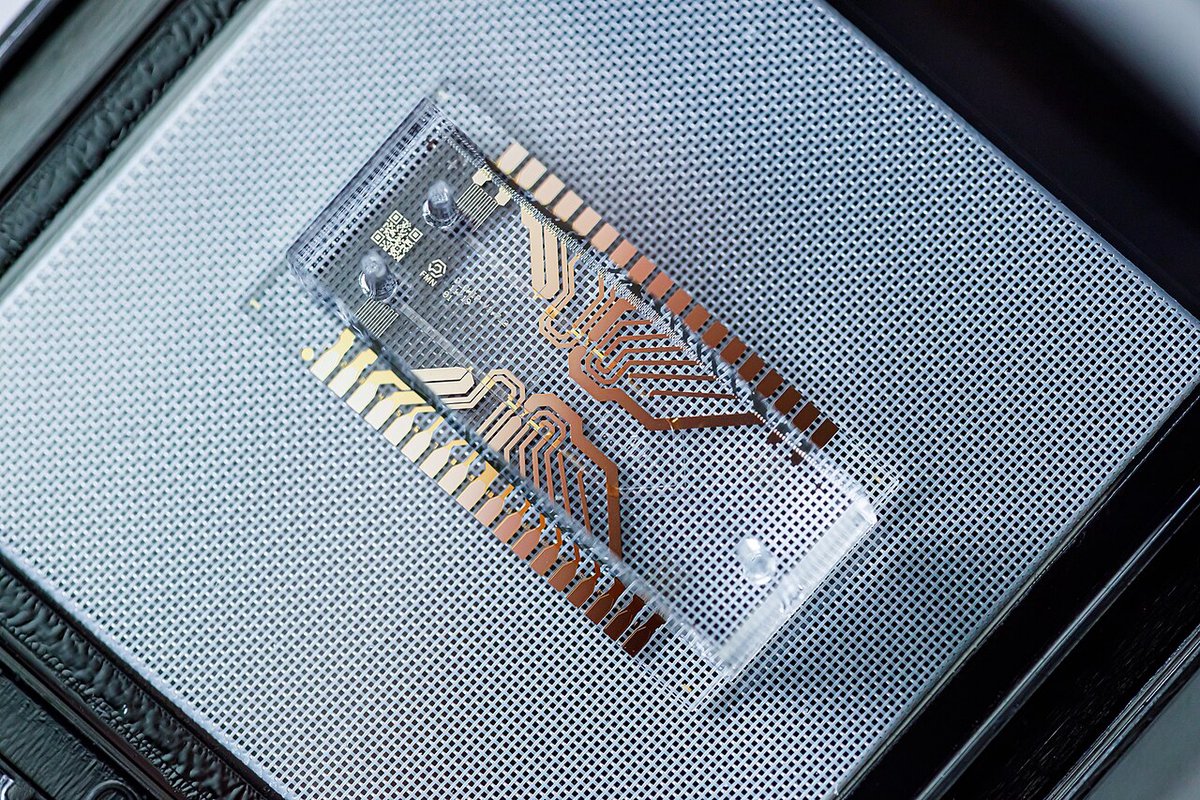
Gurkan brings three connected capabilities to the cluster: microfluidics, point-of-care diagnostic development, and human tissue-on-a-chip systems. Microfluidics is the science of moving very small volumes of fluid through channels, much like directing tiny streams through a miniature plumbing system. It can enable compact tests that use small samples and precisely controlled laboratory models.
Tissue-on-a-chip systems use living human cells in engineered devices to mimic aspects of disease. Gurkan's team can model an individual's vascular disease or cancer, then examine how a treatment performs in that specific model. BioChip Labs, a Case Western Reserve startup launched in 2020, commercializes the team's microfluidic tissue-on-a-chip technology for sickle cell disease applications.
The cluster also connects these models to imaging. Gurkan and Exner have developed real-time imaging methods for microfluidic human-disease models, combining the chips with Exner's work on nanobubble ultrasound contrast agents. Those pairings could make it possible to watch disease-model behavior and treatment responses as they occur.
Why This Matters
Putting diagnostic, modeling, imaging, and therapeutic expertise in one location could make it easier to turn a biological observation into a test, then evaluate a potential intervention. Sen Gupta also sees an opportunity to combine the group's capabilities with other ISEB clusters, including NeuroRobotics, to pursue concepts such as robotics-enabled trauma treatment.
The new space is designed for day-to-day exchanges among students, staff, and principal investigators. The researchers expect that shared equipment and closer proximity will support new collaborations, deeper industry engagement, and larger funding proposals. Whether those opportunities produce new clinical tools will depend on the projects that emerge once the cluster begins working together in the ISEB.
Topics: Microfluidics · Diabetes & metabolism · Diagnostics & precision medicine · Heart & vascular health
Start here: Microfluidics explained
Related articles
- What’s trending in point-of-care diagnostics?
- Microfluidic Impedance Biosensor Chips Using Sensing Layers Based on DNA-Based Self-Assembled Monolayers for Label-Free Detection of Proteins
- Automated Microfluidic System for Point-of-Care Detection of Pathogens
- Quantum Nanosensors Could Reveal What Organs-on-Chips Miss