Source: Foods, by Hongzhou Chen; Weichao Wu; Mengyu Li; Yang Liu; Chuanfu Lu; Qi Li; Yuwei Ren; Baocai Xu; Yingwang Ye; Kezhou Cai (August 30, 2026). AI-generated summary by biochip.com, published . Not independently reviewed.
Key takeaways
- Hefei University of Technology researchers developed a bimetallic carbon-dot biosensor for E. coli O157:H7 detection.
- The fluorescence-colorimetric platform reported a detection limit of 10 CFU/mL.
- The study does not establish clinical or commercial performance across real-world meat processing settings.
Researchers at Hefei University of Technology have developed a dual-mode biosensor designed to rapidly detect Escherichia coli O157:H7 in meat products. The platform combines fluorescence with a visible color change, two independent signals intended to make bacterial screening more reliable. Built around bimetallic carbon-dot nanozymes, the sensor reported a limit of detection of 10 colony-forming units per milliliter. That level matters because E. coli O157:H7 can cause serious foodborne illness at low exposure levels.
Two Readouts From One Nanomaterial
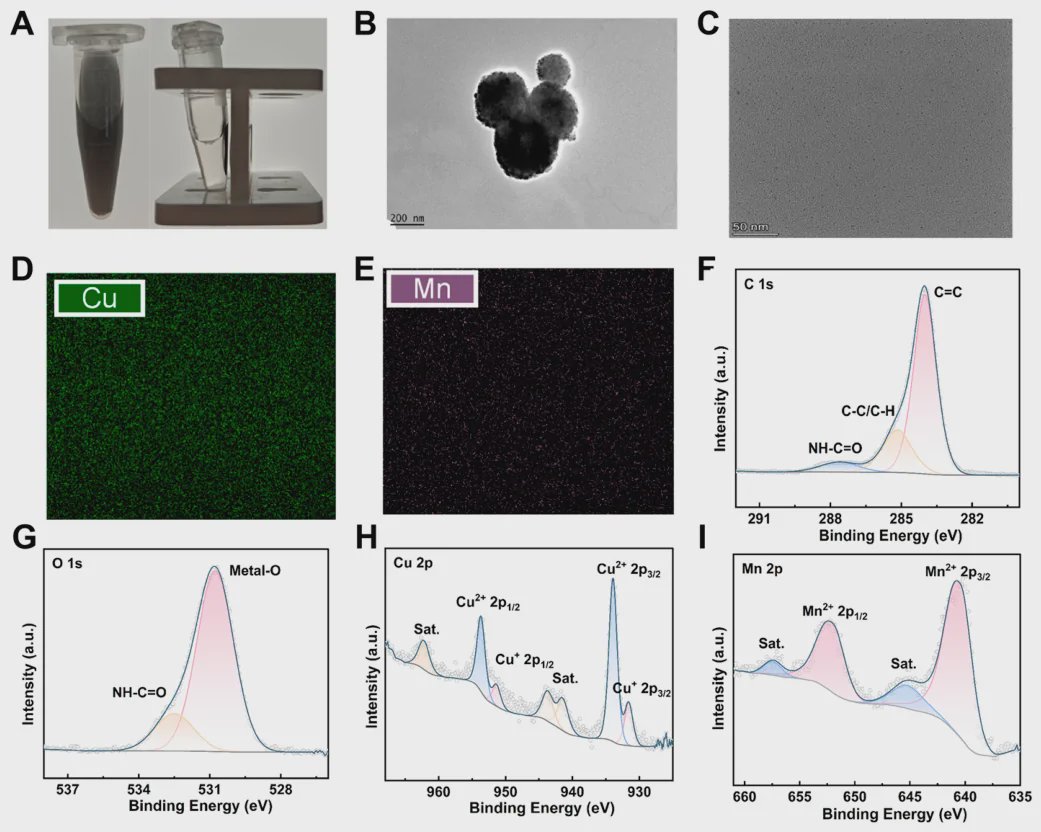
The sensing system uses bimetallic carbon-based nanozymes, tiny engineered particles that imitate the chemical activity of natural enzymes. Think of them as miniature chemical workers: they can speed up a reaction while also emitting fluorescent light. The researchers used these two properties to create separate fluorescence and colorimetric detection channels.
In the fluorescence channel, the carbon-dot material generates a signal after binding the target bacterium. In the colorimetric channel, the nanozyme acts like peroxidase, an enzyme that can drive oxidation reactions. It converts hydrogen peroxide into highly reactive hydroxyl radicals, which oxidize the initially colorless compound 3,3′,5,5′-tetramethylbenzidine, or TMB, into a blue product called ox-TMB.
Why a Dual-Mode Design Helps
A single sensor output can be vulnerable to interference from the sample, instrument conditions, or the sensing chemistry itself. The team designed the fluorescence and color signals to work as a cross-check. If both signals point to the same result, the approach may reduce the chance that an environmental effect is mistaken for bacterial contamination.
The platform uses a DNA aptamer, a short strand of DNA selected to recognize E. coli O157:H7. The aptamer was modified with a carboxyl group to support covalent attachment during sensor assembly. This recognition element gives the system its bacterial target, while the nanozyme supplies the optical signals.
Targeting a Serious Meat-Borne Pathogen
E. coli O157:H7 is an enterohemorrhagic strain of E. coli that can produce Shiga toxin. Infection can cause severe abdominal pain and bloody diarrhea, and serious cases may involve kidney failure. The bacterium can contaminate meat during farming, processing, storage, or transportation.
The organism is particularly concerning because its infectious dose may be low. The researchers note that exposure to roughly 10 to 100 colony-forming units can lead to infection under normal circumstances. Colony-forming units are a practical measure of living bacteria capable of multiplying into visible colonies.
Why This Matters
Conventional food-pathogen testing involves tradeoffs. Culture-based colony counting can be inexpensive but slow, while immunological and molecular methods may require costly reagents, specialized equipment, or careful controls to avoid false results. Existing assays can also face issues with stability, reproducibility, contamination, or quantitative accuracy.
By pairing a visible blue-color reaction with fluorescence, the Hefei team aims to make rapid screening more dependable without relying on only one measurement. The reported 10 CFU/mL detection limit suggests the approach can detect low bacterial concentrations in the tested sensing framework.
Next steps will need to determine how the platform performs across real-world meat samples and varied processing conditions. Its underlying design could also guide sensors for other meat-borne pathogens, provided that appropriate target-recognition molecules and validation studies are developed.
Topics: Infectious diseases
Start here: Biosensors explained
Related articles
- Researchers develop paper-based diagnostic tool for rapid, affordable infectious disease detection
- Electric-Field-Assisted Enrichment and Electrochemical Detection of Gram-Positive Bacteria Using an FEM-Guided Interdigitated Electrode Biosensor
- Nanotechnology-Driven Rapid Diagnostics for Future Pandemics
- Point-of-Care Microfluidic Devices for Pathogen Detection