Source: Nature Biomedical Engineering, by Li, Jiawei; Madrigal Gamboa, Sofia; Chao, Jade T.; Heilshorn, Sarah C.; Wu, Joseph C. (October 5, 2026). AI-generated summary by biochip.com, published . Not independently reviewed.
Key takeaways
- Nature Biomedical Engineering reviews multi-organ chips designed to model human ADMET processes across connected tissues.
- The review identifies niche preservation, scalable manufacturing, and multimodal readouts as requirements for robust multi-organ chip systems.
- Translation-ready multi-organ-on-a-chip systems remain out of reach despite proof-of-concept inter-organ coupling.
A Nature Biomedical Engineering review maps out how multi-organ-on-a-chip systems could improve early drug testing by linking miniature human tissue models through controlled fluid flow. These platforms aim to capture drug absorption, distribution, metabolism, excretion, and toxicity, collectively called ADMET, across several organs rather than examining each organ in isolation. The review argues that the field has shown important proof-of-concept connections between tissues, but has not yet produced systems ready for reliable translation to drug development decisions. Its central message is that useful multi-organ chips must preserve the local conditions each organ needs while still allowing organs to exchange signals and compounds.
Why multiple organs matter for drug testing
A medicine does not encounter the body as a series of separate containers. An oral drug may first cross the intestinal barrier, then travel to the liver for chemical processing, circulate to other tissues, and eventually leave through the kidneys or bile. At every stage, its concentration can change, as can the risk of unwanted effects.
Animal studies have long supported drug development, but animals do not always reproduce human biology closely enough to forecast human toxicity or drug handling. Multi-organ-on-a-chip systems are part of a broader set of new approach methodologies, meaning human-relevant experimental methods intended to complement or replace some conventional animal studies.
Building tissue niches, not just connecting cells
The review emphasizes that an organ chip needs more than the right cell types. Each tissue depends on a specialized niche, its immediate physical and biochemical environment. Like a plant adapted to a particular soil, light level, and water supply, cells require the appropriate surrounding matrix, chemical cues, mechanical forces, and neighboring cells to maintain their normal functions.
For example, blood vessels in different organs do not all behave alike. Their barriers, flow conditions, and molecular transport properties vary by tissue. A multi-organ system must therefore allow selective exchange among tissues without flattening those important differences into one shared, generic environment.
The engineering challenge of selective exchange
Human physiology works through selective exchange. Nutrients, drugs, proteins, metabolites, and signaling molecules move between organs, while barriers such as intestinal lining, vascular endothelium, and kidney tissue control what passes through. Reproducing that balance in a device is difficult because linked tissues need communication but may require distinct culture conditions.
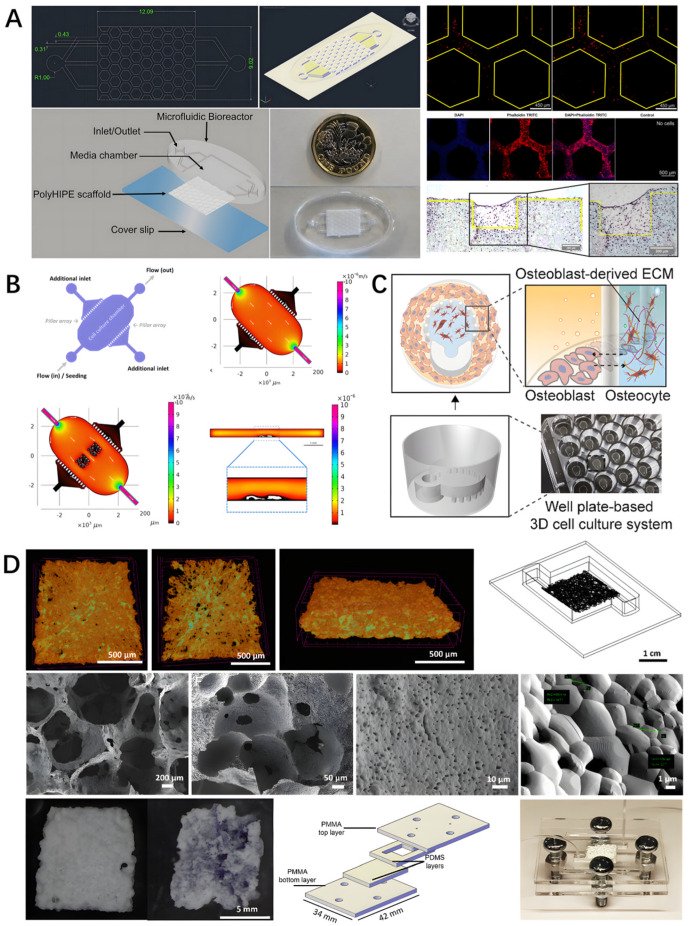
The review surveys strategies first developed for single-organ systems, then considers how those pieces can be integrated into multi-organ configurations. These approaches include engineered extracellular matrices, membranes, vascular connections, and controlled mechanical environments. The goal is to create a linked system in which each tissue retains enough of its own identity to produce biologically meaningful drug responses.
From proof of concept to dependable platforms
Existing multi-organ chips have demonstrated that tissues can be coupled to model inter-organ processes. Yet the review identifies two unresolved requirements for translation-ready systems: maintaining distinct organ niches during controlled exchange, and making devices robust enough to generate reproducible results at useful scale.
That second requirement is practical as well as scientific. Drug development needs assays that can be manufactured consistently, operated reliably, and compared across experiments. The review identifies scalable manufacturing as a necessary foundation for moving complex chip systems beyond specialized demonstrations.
Reading more than one biological signal
A connected chip is most useful when researchers can observe multiple types of response. The review highlights multimodal readouts, meaning measurements that capture different aspects of tissue health and drug action. A system might combine observations of barrier function, metabolic activity, molecular signals, and tissue injury rather than relying on a single endpoint.
This is similar to assessing a car with more than a fuel gauge. Engine temperature, battery condition, oil pressure, and exhaust all reveal different parts of the system's condition. For multi-organ chips, richer measurements could help distinguish whether a drug acts directly on a tissue, becomes harmful after metabolism, or affects one organ indirectly through another.
Why This Matters
Drug candidates often fail because their human behavior was not predicted adequately before clinical testing. A human multi-organ platform that captures key ADMET processes could provide earlier warning about toxicity and offer more realistic estimates of how drugs move and change in the body.
The review also points toward future datasets from these systems feeding into artificial intelligence workflows for drug discovery. That prospect depends on the field solving the core engineering problems first: preserving organ-specific niches, standardizing production, and generating reproducible, data-rich measurements that can support confident decisions.
Topics: Organ-on-a-chip · Drug development & safety · Heart & vascular health
Start here: Organ-on-a-chip explained
Related articles
- Setting out a roadmap for standardisation of organ-on-chip technology
- Organ-on-a-chip platforms for drug development, cellular toxicity assessment, and disease modeling
- From dietary exposure to systemic toxicity: organ-on-chip and multi-organ microphysiological systems for green food toxicology
- Opportunities and challenges for analytical chemists: organ-on-chip devices as new approach methods (NAMs) for identifying potential toxins