Source: Frontiers in Bioengineering and Biotechnology, by Shivangi Sachdeva; Ronald W Davis; Amit K Saha. AI-generated summary by biochip.com, published . Not independently reviewed.
Key takeaways
- Microfluidic point-of-care devices integrate sample handling, reagents, and detection in compact cartridges, enabling rapid testing from small blood, saliva, or swab samples.
- Eiken Chemical's Loopamp uses LAMP to detect multiple pathogens, while Meridian Bioscience's Revogene provides cartridge-based real-time PCR for C. difficile and strep tests.
- Future devices must balance accuracy, cost, manufacturing, robustness, ease of use, and regulatory acceptance; no comparative performance, pricing, or adoption data are provided.
Microfluidic point-of-care testing is reshaping how doctors detect disease by shrinking parts of a laboratory onto a small, portable device that can be used near the patient. Instead of sending samples to a central lab and waiting hours or days, these systems aim to deliver answers quickly from tiny amounts of blood, saliva, or swab material. The review article from PubMed Central maps out the commercial market behind that shift, with a focus on two major technology families: lateral flow assays, which work like familiar strip tests, and nucleic acid amplification, which looks for the genetic material of pathogens. It also shows how the COVID-19 pandemic amplified the value of fast, decentralized testing, especially when hospitals and public health systems needed results at scale. The commercial landscape spans everything from glucose meters and pregnancy tests to molecular platforms for influenza, strep, C. difficile, and SARS-CoV-2. What makes microfluidics important is not just miniaturization for its own sake, but the ability to handle fluids, mix reagents, and perform detection inside one compact cartridge or chip. That combination lowers sample needs, reduces hands-on steps, and can make advanced diagnostics usable outside a specialized lab. The review argues that these tools are moving from niche devices to a core part of healthcare delivery, while still facing technical and market hurdles that will shape the next wave of products.
What Microfluidics Adds to Point-of-Care Testing
Point-of-care testing, or POCT, means running a diagnostic test at or near where a patient is receiving care. Think of it as bringing the lab bench to the bedside, the clinic, or even the home, rather than moving the sample through a long chain of transport and processing.
Microfluidics is the engineering of tiny channels that control very small volumes of liquid, often in microliters or less. A useful analogy is a miniature plumbing system etched into a cartridge: valves, chambers, and channels guide the sample through each step so the device can prepare, react, and read it automatically.
The Two Big Technology Paths
The review highlights two dominant approaches in commercial microfluidic diagnostics. The first is the lateral flow assay, or LFA, which is the format behind many rapid strip tests because liquid naturally wicks across a paper-like membrane and produces a visual or instrument-read signal.
The second is nucleic acid amplification, a class of methods that detects DNA or RNA by making many copies of a target sequence until it becomes easy to measure. In plain terms, it is like turning up the volume on a whisper so a device can confidently tell whether a specific pathogen is present.
Why Molecular Tests Matter
Molecular platforms are especially important for infectious disease because they can identify a pathogen from its genetic signature. That can improve specificity, which means the test is better at distinguishing one organism from another instead of relying only on broader chemical or immune signals.
The review points to polymerase chain reaction, or PCR, and loop-mediated isothermal amplification, or LAMP, as key methods in this category. PCR cycles through different temperatures to copy genetic material, while LAMP does the amplification at a constant temperature, which makes it easier to package into smaller, simpler devices.
Examples Already on the Market
One example is Loopamp, developed by Eiken Chemical Co., Ltd. and based on LAMP isothermal amplification. According to the review, it has been used to detect a wide range of infectious diseases, including Mycoplasma pneumonia, Bordetella pertussis, Legionella pneumonia, H1 pdm 2009 influenza, influenza A, influenza A subtype H5, SARS, Aspergillus, herpes simplex, and West Nile virus, and it has also been used for SARS-CoV-2 diagnosis.
The review also names Revogene and Alethia from Meridian Bioscience as rapid molecular diagnostic platforms. Revogene is described as a microfluidic cartridge-based real-time PCR device for tests such as C. difficile, Group B strep, and Streptococcus A, while Alethia uses a LAMP-based format designed for fast pathogen detection in a point-of-care or near-patient setting.
Why the Market Expanded So Quickly
Several forces pushed point-of-care testing from convenience to necessity. The review notes practical advantages that matter in real clinics: ease of use, no need for highly skilled personnel, limited dependence on bulky equipment, low sample volume, and faster turnaround times.
COVID-19 made those benefits impossible to ignore. During the pandemic, the healthcare system needed tests that could move outside central labs and closer to patients, making microfluidic cartridges and simple readout formats far more valuable than they might have seemed in ordinary times.
The Business Side of the Field
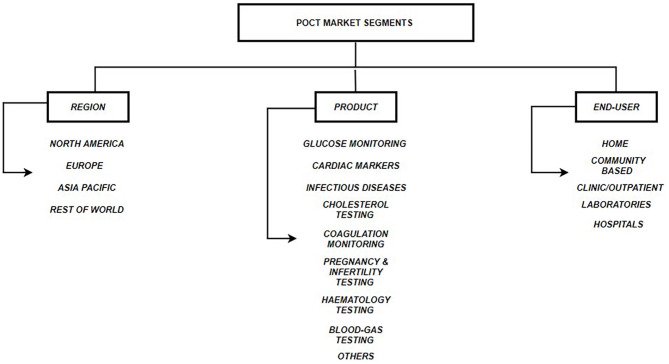
The article describes a market that covers much more than infectious disease. Commercial POCT already includes blood glucose testing, pregnancy and fertility testing, cholesterol testing, cardiac marker assays, and coagulation testing, showing that the same basic design logic can serve many clinical needs.
It also cites a market forecast estimating that the POCT market would reach USD 25.4 million by 2022, with a compound annual growth rate of 5.7%. The review identifies major companies active in the sector, including Abbott Laboratories, Danaher Corporation, Beckman Coulter Inc., and Siemens AG, reflecting how both specialized diagnostics firms and large healthcare companies are competing in this space.
Why This Matters
The real promise of microfluidic POCT is not only speed, but access. A test that needs less sample, fewer manual steps, and less infrastructure can reach settings where a full laboratory is unavailable, from small clinics to outbreak response sites to lower-resource health systems.
That matters because timing often shapes medical decisions. A same-visit result can help a clinician start treatment, isolate an infectious patient, avoid unnecessary antibiotics, or decide whether more testing is needed, all without the delays that come from shipping samples away.
What Comes Next
The review suggests the future will depend on how well companies balance accuracy, cost, ease of manufacturing, and regulatory acceptance. Building a clever chip is only part of the challenge; the device also has to be robust, simple enough for routine use, and affordable for the health systems expected to buy it.
Even so, the direction is clear. As microfluidics continues to merge with molecular biology, the next generation of point-of-care tests is likely to become more compact, more automated, and better able to handle complex diagnostics outside the lab, bringing fast decision-making closer to the patient.
Topics: Microfluidics · Diagnostics & precision medicine · Infectious diseases
Start here: Microfluidics explained