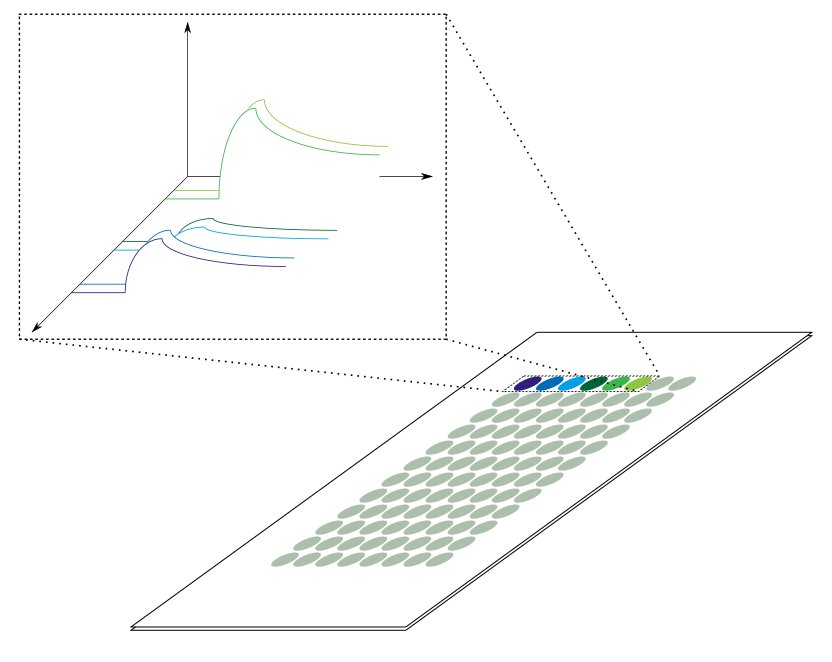

Source: Scientific Reports, written by Rashmi Chowdhary; Ujjawal Khurana; Ajay Halder; Sulatha Dwarakanath; Sanjeev Kumar; Shilpa Navinchnadra Kaore; Ashish Jadhav; Sudhir Kumar Goel; Neelkamal Kapoor; Suryabhan Lokhande; Abhijit Rozatkar; Antu Kumar; Doyel Mukherjee; Neelu Nagar; Rupali Purohit; Mukesh Yadav; Vrushali D. Patil; Suman Kumar Ray; Jagat R. Kanwar (November 2, 2026). AI-generated summary by biochip.com, published . Not independently reviewed.
Key takeaways
- AIIMS Bhopal researchers evaluated the KayaCervi prototype using cervical swabs and multiple biomarkers, including p16, HPV-16, HPV-18 and Ki67.
- Community validation compared KayaCervi with liquid-based cytology in 865 apparently healthy women from 36 villages.
- The study does not show that KayaCervi screening reduces cervical cancer cases or deaths.
Researchers at the All India Institute of Medical Sciences (AIIMS) Bhopal evaluated KayaCervi, a prototype device designed to screen for cervical cancer using several biomarkers in cervical swab samples. The test combines laboratory analysis of proteins and human papillomavirus (HPV) markers, with the goal of identifying people at risk in community screening programs. The team assessed the device in a community cohort of 865 apparently healthy women and compared its results with liquid-based cytology, a method for examining cervical cells. The work explores whether a multi-marker test could support screening in areas where access to health care is limited.
A panel of markers from one swab
A single biomarker can miss part of the picture, much like judging a book by one page. KayaCervi tests a set of markers associated with cervical cell changes, including p16, Ki67, HPV types 16 and 18, MCM5 and CD146.
The researchers also examined markers such as CA-125, CA19-9, ACTN-4 and carcinoembryonic antigen (CEA). In their testing, the combination of p16, HPV-16, HPV-18 and Ki67 showed the strongest potential among the marker combinations studied, with MCM5 and CD146 also identified as promising markers.
To prepare a sample, the team collected cells from a cervical swab, broke them open to release proteins, and tested the material using an enzyme-linked immunosorbent assay (ELISA). ELISA works like a molecular fishing net: antibodies capture specific target molecules, allowing the test to detect their presence. The processed swabs were tested on the KayaCervi prototype alongside Pap testing.
Testing in clinics and communities
The project had two phases. During standardization at AIIMS Bhopal, the researchers optimized the device using samples from 200 outpatients ages 30 to 70, supplemented with confirmed positive cases. This phase helped set test cutoffs and assess performance against Pap smear results.
For community validation, the team recruited 865 apparently healthy women from 36 villages in the Bhopal area. Participants received both KayaCervi testing and liquid-based cytology, which served as the reference method for comparing the test’s ability to identify cervical cell abnormalities. The study emphasized specificity, the ability to correctly identify people who do not have the condition. High specificity matters in population screening because false alarms can lead to unnecessary referrals, anxiety and added costs.
Why This Matters
Cervical cancer screening can prevent disease when it finds cell changes early enough for follow-up and treatment. A test based on swabs and multiple markers could offer another approach for community programs, particularly where specialist services are harder to reach. But a prototype’s promise depends on how reliably it performs across the people and settings where it would be used.
The next step is to establish the device’s diagnostic accuracy in larger and varied screening populations and determine whether positive results can be followed by timely care. This study evaluates the test against cytology; it does not show that KayaCervi screening reduces cervical cancer cases or deaths.
Topics: Cancer · Diagnostics & precision medicine
Start here: What is a biochip?
Related articles
- Liquid Biopsy in Breast Cancer: Biomarkers and Clinical Applications
- Microchip Detection of Magnetically Labeled Cancer Biomarkers
- Integrated “Lab-on-a-Chip” Microfluidic Systems for Isolation, Enrichment, and Analysis of Cancer Biomarkers
- Microfluidic biosensors for biomarker detection in body fluids: a key approach for early cancer diagnosis